
Texas Insurance Leads: Volume, Competition, and Where the Margin Hides
Six weeks into a Texas push, an illustrative agency group called Lone Post Partners had exactly what they asked for: volume. Their four-state test had produced more Texas insurance leads than the other three states combined. It had also produced their worst cost per bound policy, and every dollar of the overage traced to two metros. Nobody had done anything wrong. They had simply walked into the most contested auction floor in the country holding a statewide bid. Texas insurance leads are abundant and, in the big metros, expensive in a way that quietly eats a media plan. The margin is real. It just is not where the volume is.
- Texas offers enormous volume, which makes a statewide bid feel efficient while hiding metro losses.
- The metro-to-rural cost spread across Texas insurance leads is the single most useful thing to measure in your first 30 days.
- Hail season drives property demand that overlaps auto through bundling and through vehicle damage.
- Carrier ad spend is expanding again, which raises auction pressure on the same metro inventory.
- Structure Texas as several markets with separate caps, not one line item.
The volume trap
Texas is a huge population spread across a very large area with several major metros and a long tail of mid-size cities and rural counties. That produces query volume in almost any insurance vertical, which is why buyers like it and why they get careless in it.
The trap works like this. Statewide volume fills your pacing, pacing looks healthy, and the blended cost per bound policy sits just inside target. Underneath, the metro portion is running well over target and the rural and mid-size portion is running well under, and the average is telling you nothing. Lone Post found a spread of roughly two and a half to one between their most and least expensive Texas market segments in their own account. Your number will differ. The existence of a large spread will not.
The metro-rural spread in Texas insurance leads
The Dallas-Fort Worth Metroplex, Greater Houston, San Antonio, and the Austin corridor concentrate a large share of the state's shopping population and an even larger share of advertiser attention. Every national carrier, every aggregator, and every regional agency group wants that inventory. Mid-size markets such as El Paso, Corpus Christi, Lubbock, and the Rio Grande Valley draw less national bidding pressure, and rural counties less again.
| Segment | Volume | Competition | Typical role in a Texas plan |
|---|---|---|---|
| DFW and Houston | Very high | Highest | Volume engine, tight caps, hardest to make profitable |
| San Antonio and Austin | High | High | Test creative and offers here before metro scale |
| Mid-size cities | Moderate | Moderate | Frequently the best cost per bound policy in the account |
| Rural counties | Low per county, large in aggregate | Lower | Slow to accumulate, strong economics, needs patience |
Rural Texas insurance leads come with a real operational cost. Volume per county is thin, so statistical reads take longer, and a call centre optimized for metro rhythms may handle them poorly. Some buyers decide the management overhead is not worth it. That is a legitimate call, and it is a different call from not knowing the spread exists.
Hail season and the auto-home overlap
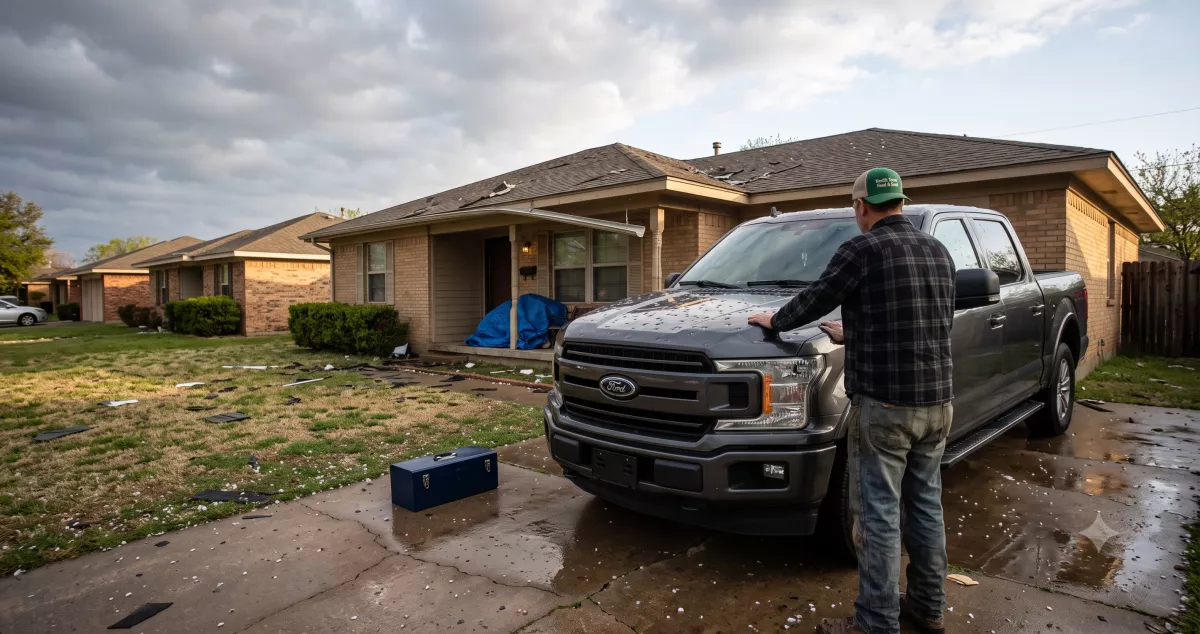
North and Central Texas sit in one of the most hail-prone regions in the United States. Spring convective storms are a structural feature of the market, not an anomaly, and they produce two demand effects at once.
Both effects show up in the mix of Texas insurance leads you receive, usually within days. The property effect is obvious. Roof damage drives claims, claims drive rate and non-renewal conversations, and those conversations drive shopping. The auto effect gets overlooked: hail damages vehicles, comprehensive claims follow, and a household that just filed a comp claim is a household about to compare prices.
Lone Post built a simple rule out of this. When a significant hail event hit a metro they were buying, they lifted caps on both auto and home in the affected counties for the following three weeks and staffed the phones accordingly. Not because storms create good leads automatically, but because the shopping population in those ZIPs temporarily expands and the intent behind a post-claim quote request is genuine.
Auction pressure from carrier spend
Direct carrier advertising budgets have been expanding. Progressive reported advertising spend increases in every quarter of 2025, and GEICO has ramped spend back up after its 2022 to 2023 cuts. Those are company-reported and trade-reported directional facts, not a forecast for your account, but the mechanism is straightforward: more carrier money chasing the same metro inventory raises the floor everyone else has to clear.
For anyone buying Texas insurance leads in DFW or Houston, that pressure lands hardest exactly where you already have the least room. It is another argument for treating the metros as a controlled-volume segment rather than the place you go to scale.
Where the margin in Texas insurance leads actually hides
- Mid-size metros that national buyers underweight because the volume looks unexciting
- Bundle-intent households in hail-exposed counties, where two lines justify one acquisition cost
- Off-peak hours, when metro competition thins but your call centre is still staffed
- Spanish-language funnels in South and West Texas, which many advertisers under-serve
- Sources that pass coverage-intent and household fields at ping, so you can price properly
- Long-tail rural aggregation, if you have the patience for slow reads
None of these are secrets, and none of them require a source nobody else can access. They are just less convenient than buying DFW, which is precisely why they stay available.
How to structure a Texas buy
A reallocation worked through
Segments are a slide until somebody moves money between them, so here is what Lone Post actually did with a $200,000 quarterly Texas budget. Account figures, illustrative, and the ratios matter more than the totals.
The starting split was accidental rather than chosen: roughly 70 percent of spend landed in DFW and Houston, because that is where a statewide bid finds inventory first. Index their cost per bound policy in those two metros at 100. Secondary metros came in around 78 on the same index. Mid-size cities came in near 62. Rural, on thin volume and a noisy read, sat somewhere between 55 and 70 depending on the month, which is another way of saying they could not measure it precisely yet.
They moved to a deliberate 45 / 25 / 22 / 8 split across major metros, secondary metros, mid-size cities, and rural, holding total spend flat. Bound-policy volume dipped about 6 percent in the first six weeks while the mid-size segments accumulated. By the end of the quarter, total bound policies were slightly ahead of the previous quarter and the blended cost per bound policy had come down by a mid-teens percentage. No new creative. No new source. They simply stopped buying the most expensive Texas insurance leads by default.
The uncomfortable part: the metro capped segment still burned budget every single day, and someone had to defend keeping it. They kept it because the metros generate the volume that funds their fixed call-centre cost, and because a brand with no presence in DFW loses relevance with carriers. Capping is not abandoning.
What does not work here
A single statewide CPL cap. It will be wrong for every segment simultaneously.
Scaling into DFW because the volume is available. Availability is not the same as opportunity, and in the most contested metros in the country it is often the opposite.
Buying post-hail property surges without checking carrier appetite first. You will pay for leads nobody on your panel will quote.
Assuming rural Texas insurance leads behave like rural anywhere else. Drive times, agent density, and vehicle mix all differ, and so does the right contact cadence.
Texas rewards operators who accept it is four or five markets in a trench coat. Set the segments up front, and if you want the full pipeline context that these segment decisions sit inside, our US auto insurance lead generation guide lays out the machine end to end before you go buy Texas insurance leads at scale.
- Texas insurance leads are abundant, and abundance is what makes a statewide bid dangerous.
- Measure the cost spread across your Texas insurance leads by segment before you scale anything.
- Hail season moves auto and home together. Have a pre-agreed response playbook.
- Rising carrier ad spend pressures metro inventory hardest.
- Margin sits in mid-size markets, bundle households, off-peak hours, and under-served language segments.
DL Minds Growth Desk
Digital marketing and web development expert at DL Minds. Passionate about helping businesses grow through innovative technology solutions and strategic digital marketing.